
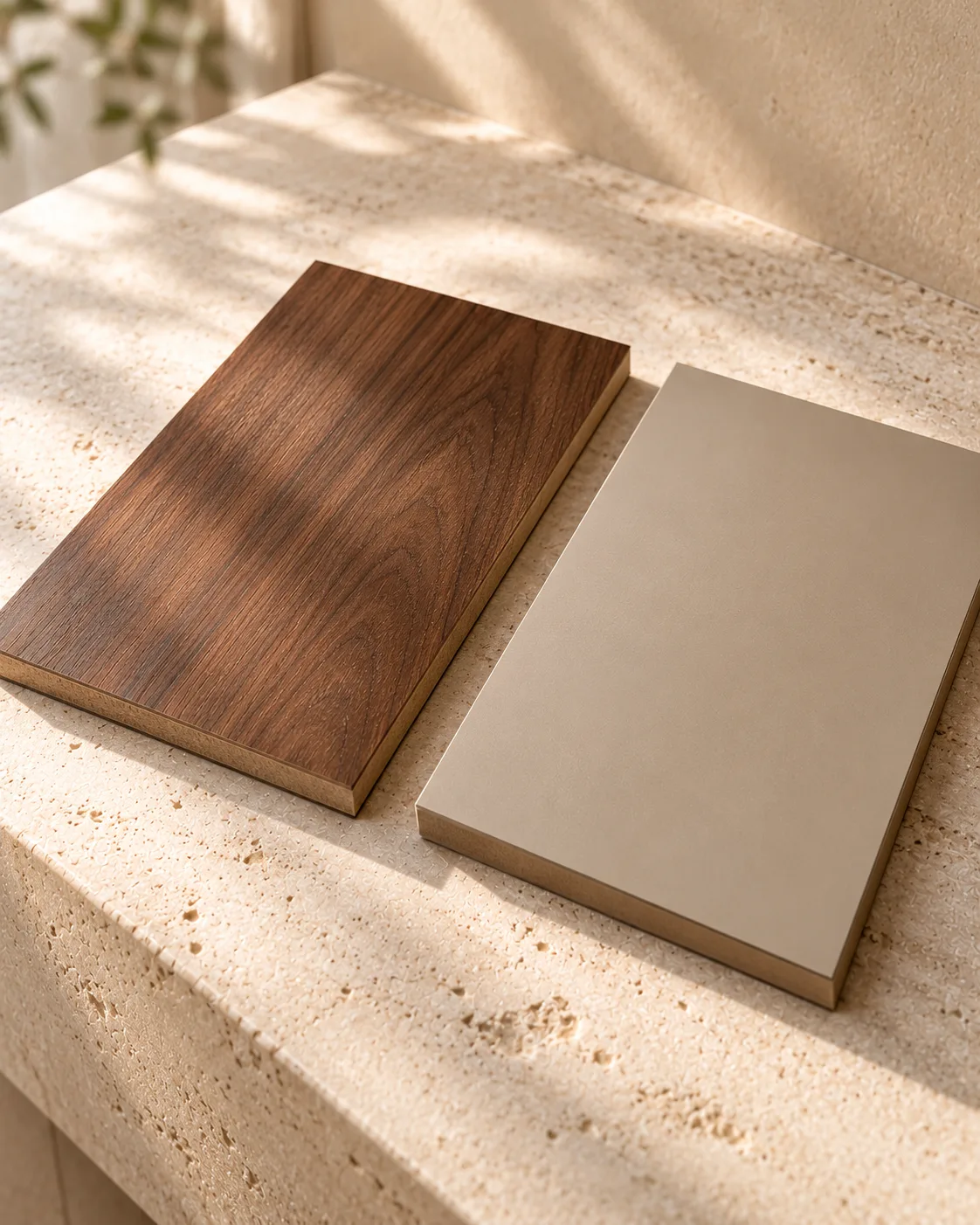
This realistic material study is fictional material inspiration for comparing face, edge and scale; it does not identify an actual product.
Begin with what the face is.
Veneer is a thin wood surface used as an expressive visible finish. Its grain comes from wood, so direction, figure and variation are part of how it reads. Laminate is a manufactured layered surface. Depending on the product, its visible pattern may be printed, plain or textured. Exact construction and care guidance belong to the supplier’s information for the chosen sheet.
That difference is useful, but it is not a ranking. A natural wood reading may be important in one room; a more repeatable visual field may suit another. The application, surrounding materials and maintenance expectations should guide the comparison.
Look for the differences you can verify.
- Grain and repeat: notice whether the pattern moves naturally from one sample to the next or follows a controlled repeat.
- Touch and reflection: hold each sample at the same angle and notice the texture and way light travels across it.
- Edges and joins: check how the visible face meets an edge, a handle, a corner or an adjoining surface.
- Care questions: ask for the actual cleaning, heat, moisture and wear guidance rather than relying on a broad material label.
Keep the question specific.
Write down where the surface will sit, how large the visible field is and what it will meet. A cabinet door, a feature wall and a small detail may call for different ways of judging the same sample. Compare both options in the light of the room, then record the confirmed sheet name and supplier information.
Bring a room photograph or drawing to Elegance Veneers in Nashik. The useful conversation is about a real application, not a promise attached to a category.