
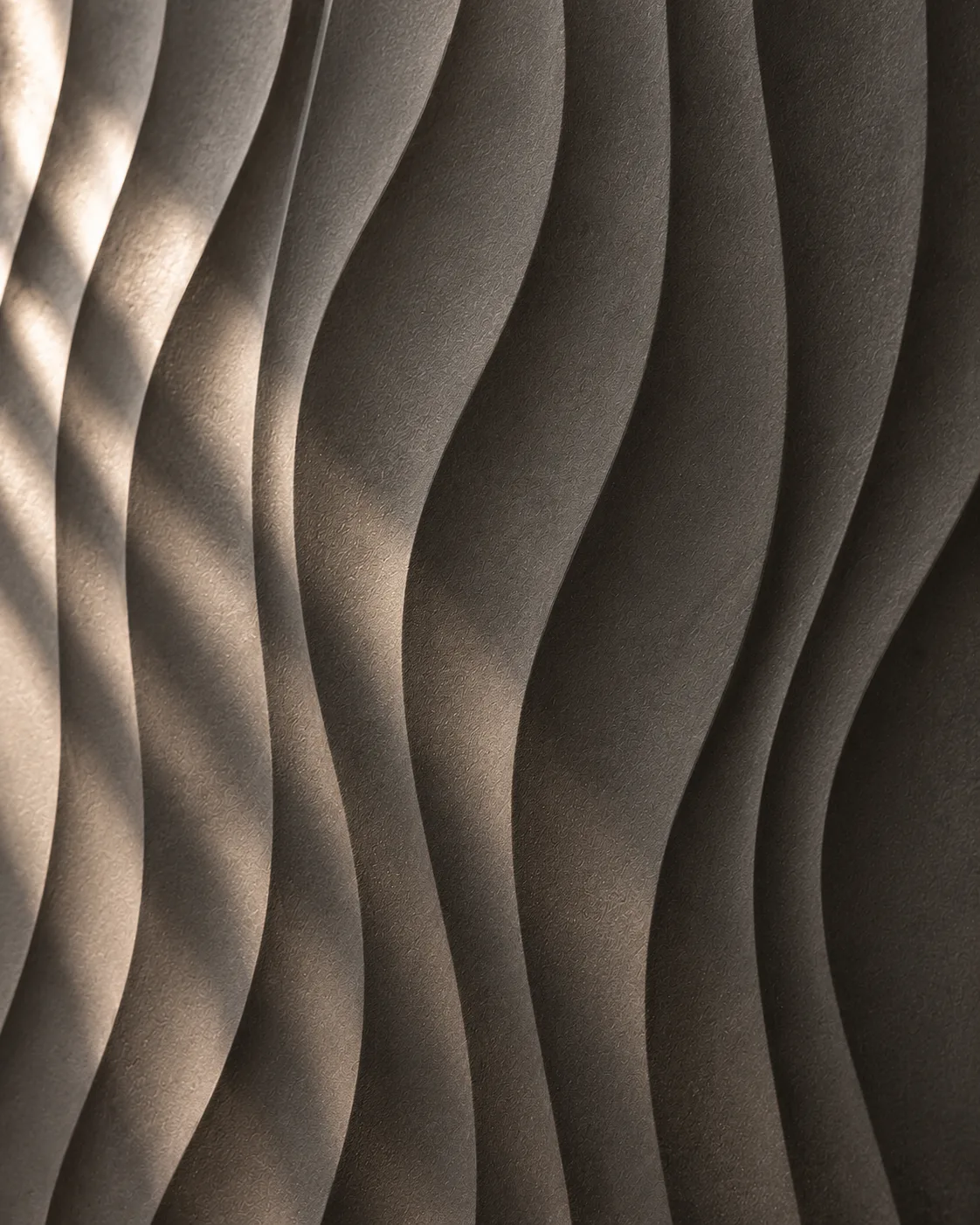
This realistic material study shows relief at an angle as fictional inspiration, with enough context to understand scale and shadow.
Start with the light direction.
Relief gives a wall more than one reading because raised and recessed areas interrupt light. A light close to the surface can make small changes in depth visible; a broad, frontal light may read more softly. Windows, wall washers and ceiling fittings each create different conditions.
Mark the main light sources on the drawing. Then ask whether the surface should remain legible throughout the day or become more restrained when the light is flat.
Check scale and rhythm.
- Viewing distance: look from the doorway, the seating position and the closest regular approach to the wall.
- Pattern size: compare a small detail with the full field. A repeat can feel calm at one scale and busy at another.
- Joints: draw surface breaks, corners, openings and services before judging only the centre of the sample.
- Transitions: note how the relief meets a plain wall, skirting, ceiling, floor or another material.
Include the everyday questions.
Raised surfaces can collect dust in their recesses, and cleaning access may matter as much as the first impression. Ask for the specific care guidance, fixing method, edge detail and replacement approach for the selected material. Confirm whether the wall needs a prepared base or a particular installation sequence.
Also mark sockets, switches, artwork, furniture and hand-height contact on the elevation. A relief pattern is easiest to judge when the interruptions that belong to the room are part of the drawing from the start.
Bring the wall elevation and a visual reference for the room to Elegance Veneers. The studio address is at Canada Corner, Nashik; the visit details are on the home page.